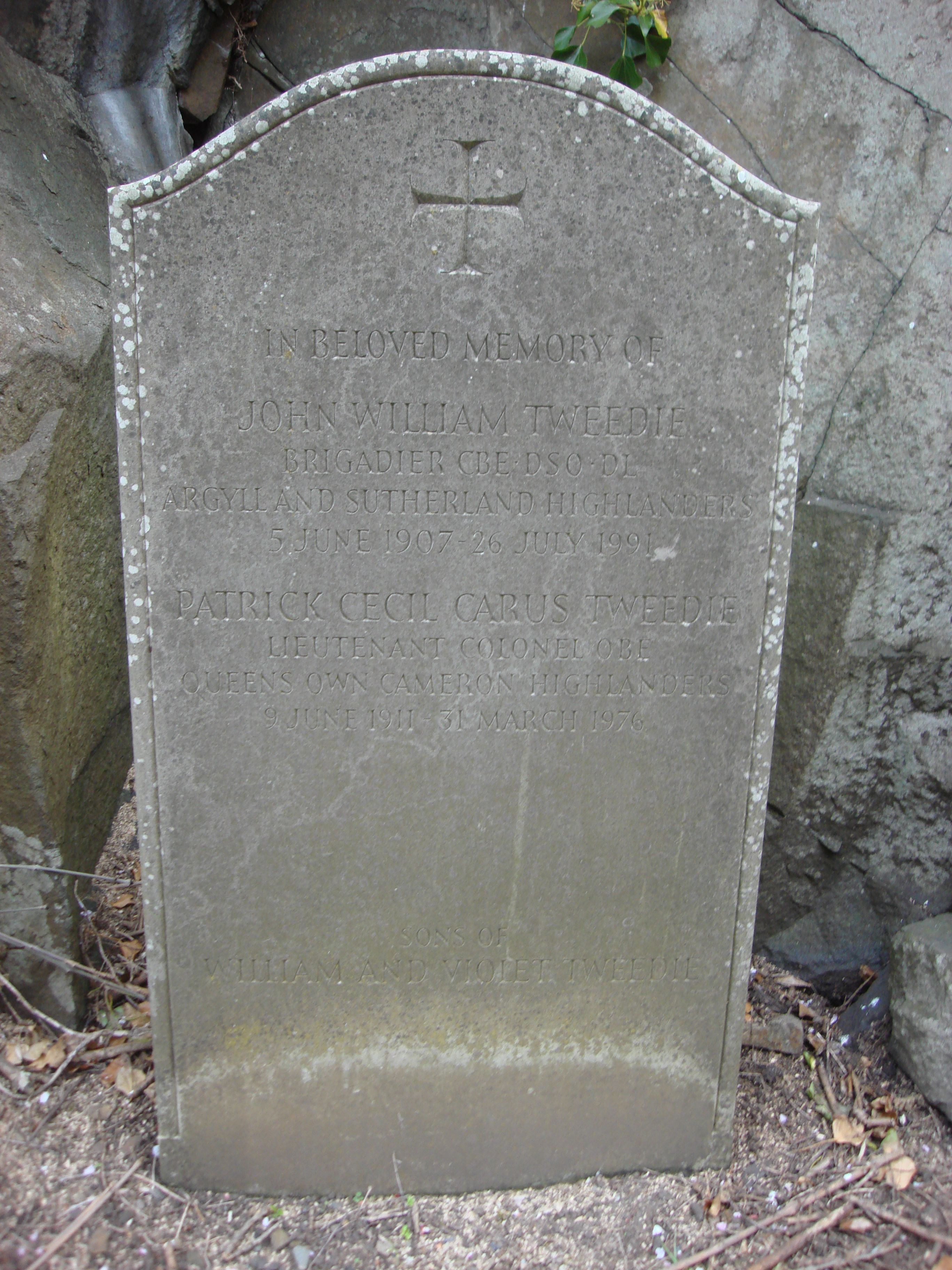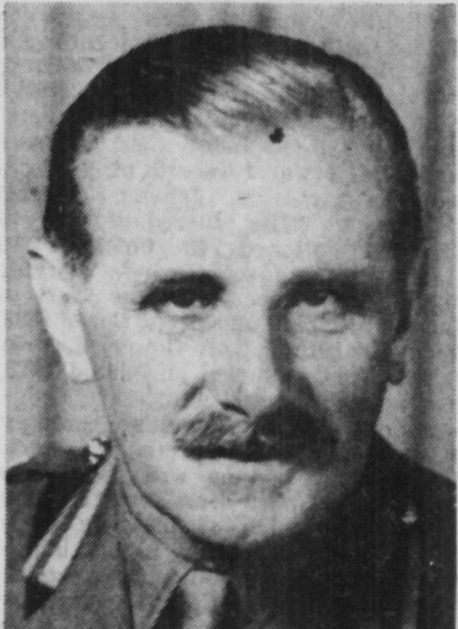
Eldest son of Colonel William Tweedie CMG, CBE of Beechwood, Dunblane. John and Giles were brothers. He married Sheila Hudson 2 Sept 1937 in Newbury, Berkshire. He is buried in Sterling.
| Unit or location | Role | Posted from | until |
|---|---|---|---|
| Borders | Intelligence Officer | 22 Apr 1944 | mid June 1944 |
Ampleforth College
Sandhurst
Professional soldier
Varied military career
1926 2nd Lieutenant Argyll & Sutherland Highlanders
18 Dec 1931 Aide-de-camp to the Governor General Dominion of New Zealand
1 Dec 1936 - 31 March 1939 Argyll & Sutherland Highlanders Adjutant, Staff Captain 15 May 1941 - 5 June 1941, Brigade Major 25 June 1941 - 20 Dec 1941
6 Dec 1942 - 3 Dec 1943 General Staff Officer 1 Staff Duties & Training, HQ Eastern Command
End 1942 - 1944 Commanding Officer 2nd Battalion, Argyll & Sutherland Highlanders
April 1944 General Staff Officer 1 HQ Allied Land Forces South East Asia
January 1946 - July 1947 General Staff Officer 1 South East Asia Command
25 Aug 1947 - 8 Feb 1949 Assistant Adjutant & Quartermaster General for East Anglian District
1 March 1951 - 11 June 1954 Commander 39th Brigade
1 May 1954 - Feb 1957 Brigadier General Staff (Ops & Training) HQ British Army of the Rhine
1959 - 1961 Aide-e-camp to H.M the late Queen Elizabeth
1969 - 1965 Army Reserve of Officers (Age Limit)
A career military man, John Tweedie was in the Argyll & Sutherland Highlanders. He went from school, through the army, to finish as a Aide-de-camp to the late Queen Elizabeth.
He held a number of high ranking roles General Staff Officer 1, Quartermaster General and Commander 39th Brigade among many.
The Scottish Borders Auxiliary Units in late 1943 were taken under the wing of the Regular Army for administration so when Captain Peter Forbes left in 1943 John Tweedie took over the Intelligence Officer role for the Borders Area.
He was awarded the Distinguished Service Order for gallant service in North West Europe in Oct 1944. Tweedie earned the D.S.O. for the capture and defence of a key bridgehead:
The Bn remained in this difficult situation for over 3 hrs and throughout this time of constant strain, threat of enemy attack and infiltration from all sides, Lt Col Tweedie remained completely calm and in control of the situation, and by his personal example sustained the spirit of the troops. Thanks to his skilful disposition when the order to withdraw was received the Bn was extricated with comparatively light casualties
He was awarded Commander of the Most Excellent Order of the British Empire in 1958.