Matches, Fuzee, Non-flaming (also known as Matches, Fuzee, Large) were a slow burning, non-flaming safety match used to ignite demolition stores (fuses, explosives, incendiaries, etc), mainly those using Bickford fuse. On striking, they would burn with a pale yellow glow and could not be extinguished, even underwater. They were produced in boxes of 20 matches, wrapped in cellophane. They could be struck on the side of the matchbox, or using a striker board covered with safety match composition. They were manufactured by Bryant and May, the Quaker founded match company, with factories in London and Liverpool.
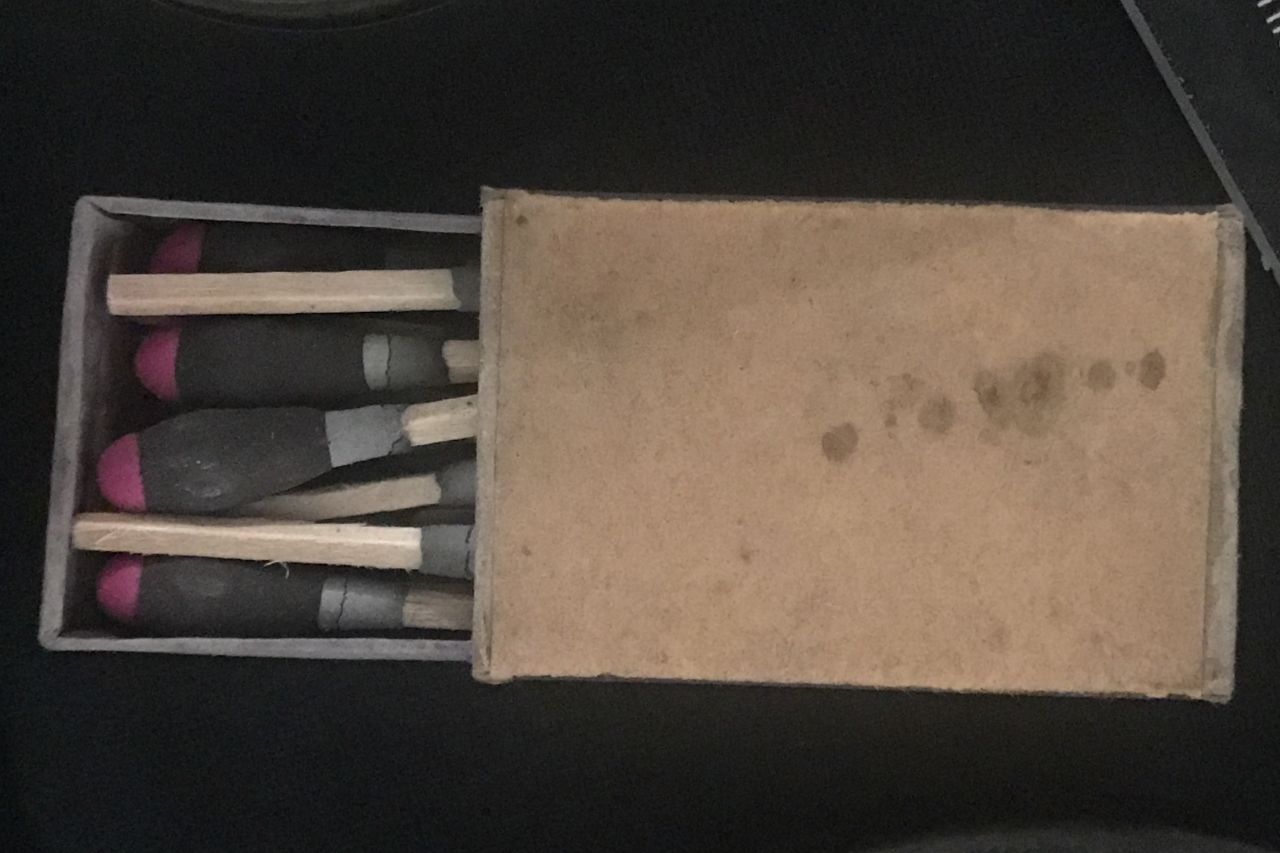
Auxiliary Units were issued with these as part of the Aux Units Mark 1 packs, which each contained two boxes. They also formed part of the equipment listed in the SOE Descriptive Catalogue of Special Devices and Supplies at item F 29. This gave the dimensions of the matchbox as 2.25 x 1.4375 x 0.75 inches, with a filled weight of 0.375 ounces. The boxes were plain, with match composition on both edges, with a light blue or mauve paper covered tray. Most were made from millboard (compressed cardboard) after supplies of matchwood veneer ran short early in the war. hundred boxes were packed in the tin liners for the wooden crate H30 Mark 1E. These were hermetically sealed, protecting the matches from damp. Two tins fitted in each crate. They are also known to have been packed in the much smaller wooden box, H25 Mark 2, which came with an integral tin liner, containing just ten boxes. Known examples of each type were dated 1943. In practice, SOE delivered them in smaller numbers, with 3 boxes being part of the standard sabotage drop cannister.
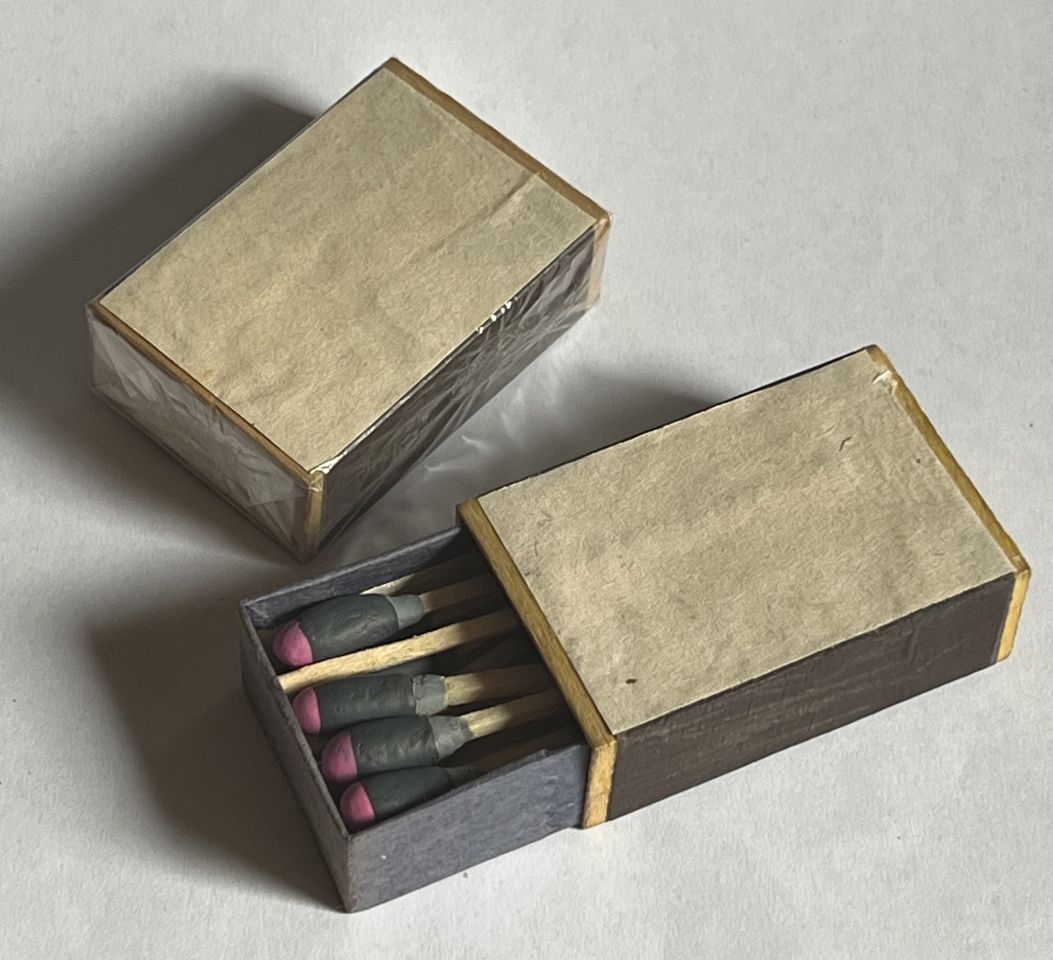
There were also Matches, Fuzee, Small, designed specifically for the ignition of Generators, Smoke, No.24, a 40lb smoke cannister often used to create anti-aircraft smokescreens, and also used on the D Day beaches. It appears that these also formed part of some SOE supply drops. The matches were slightly smaller with a less bulbous head, in a smaller box, but otherwise identical.
After the war they remained in service, repacked into M166 Mark 1 wooden boxes, with a resealable metal liner. Within this they were wrapped in smaller bundles of a dozen boxes. Officially they were obsolete by the 1960s, but are known to have remained in service until at least 2005. Reportedly these were 1943 dated examples!
References
Secret Agent’s Handbook of Special Devices, M Seaman, 2000
SOE Equipment Air Dropped in Europe 1940-1945, A Thyssen and M Sode, 2023
British Ordnance Collectors Network
https://www.arrse.co.uk/community/threads/wwii-vintage-kit-still-on-issue.9797/#post-172632
P van Onsem, Behind the Lines - SOE and the Clandestine War Facebook Group