Wharram is located on the Yorkshire Wolds north-east of York (approx 25 miles away) in Ryedale
| Name | Occupation | Posted from | Until |
|---|---|---|---|
| Sergeant Thomas Henry Milson | Tractor driver |
Unknown | 03 Dec 1944 |
| Corporal Thomas Johnston | Vermin destroyer |
Unknown | 03 Dec 1944 |
| Private Albert Burton | Quarry foreman |
Unknown | 03 Dec 1944 |
| Private Charles Henry Mears | Tractor driver |
Unknown | 03 Dec 1944 |
| Private George William Snaith | Apprentice motor fitter |
Unknown | 03 Dec 1944 |
| Private Harold Walker | Farmer |
Unknown | 03 Dec 1944 |
The OB was on the east facing slope of a steep valley to the west of Wharram le Street. The main Malton-Driffield railway line being in the bottom of the valley and the OB overlooked it. There was a small beck called the Gypsy Race. It was on Red House Farm, owned by Robert Peacock, an officer in the Wharram Home Guard. However, he knew nothing about its existence until after the war was over.
The OB was built by the Royal Engineers using corrugated iron and tree trunks. It was large enough to hold the six Patrol members. The small door to the burrow-like entrance was disguised with soil and grass rendering invisible to passers by. A gnarled oak provided a landmark to locate it. It was used to store ammunition, explosives, food and cooking equipment. Harry Milson said "The dug-outs consisted of living quarters. It was like a rabbit hole. There were bunks to lay down and rest and we even had a field telephone"
By 1991 the roof had collapsed leaving a large hollow in the field. By 1998 there was virtually nothing left to see.
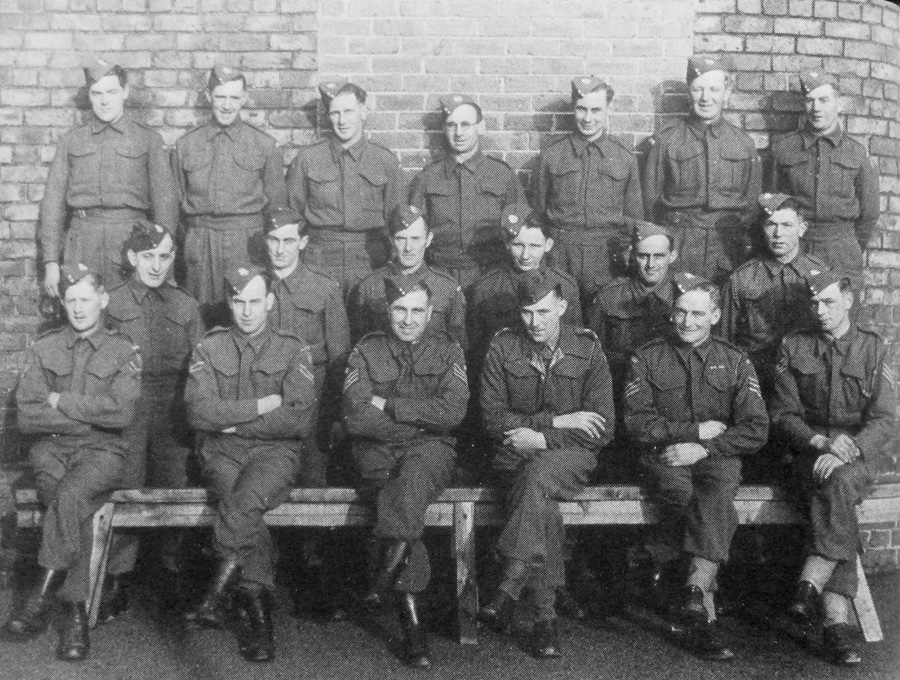
Wharram le Street Patrol
Targets would have included the Malton to Driffield railway which was heavily used during WW2 by both troop and munitions trains. These supplied several RAF airfields around the area. The tunnel at Burdale was considered so important that the army guarded either end 24 hours a day.
Other targets were RAF Cottam, RAF Driffield and they practiced infiltrating the aircraft storage areas to "sabotage" the planes. They also operated against Settrington Hall and Castle Howard.
Local training was carried out at Middleton Hall, and Guisborough rifle ranges with exercises at Settrington Hall and local Airfields.
They fired their weapons at Wharram quarry. They also trained with the Westow and Leavening Patrols. This included close quarter fighting, explosives, sabotage and survival skills
Family were told they were engaged in "Home Guard business" when they went out training, with no other details given. Night exercises against regular troops were a common feature of their training.
Some members went to Coleshill House for specialist courses.
At the end of the war, their equipment was collected in and they returned to their civilian lives.
Harry Milson recalled the Patrol were armed with .38 Colt revolvers.
TNA ref WO199/3389
Hancock data held at B.R.A
1939 Register
Andy Gwynne
East Ridings Secret Resistance by Alan Williamson
Beverley Guardian 6 Feb 1998